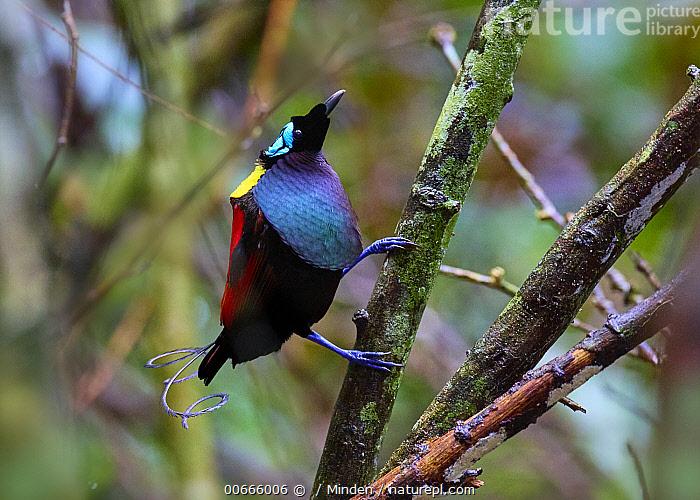
Wilson’s bird-of-paradise
Diphyllodes respublica
Near-exact natural match
Sound · forty octaves · light
Map a musical note upward by octaves and its number can correspond to a frequency of visible light. Combine notes, and you get a color palette. Nature is already wearing those chords.
Yes. One verified photograph shows the male’s yellow nape, emerald-green breast shield, violet-lilac breast edge, and violet curled tail wires together—the B–D–F♯ palette in one frame.
The transformation
Keep doubling a note’s frequency mathematically. Around forty octaves up, its number can correspond to visible light—giving every pitch class a color.
This is a mathematical correspondence, not sound physically turning into light. Notes are octave-folded into the visible range: A440 shifted by forty octaves corresponds to about 620 nm light. A432 rotates the full palette 9.53° toward red while preserving every interval.
A440: 440 Hz × 240 ≈ 483.79 THz ≈ 620 nm. A432: 432 Hz × 240 ≈ 474.99 THz ≈ 631 nm. A432 is popularly called “nature’s frequency,” but that label has no established scientific basis. Here it simply offers a second visual reading.
02 · Chords in nature
Choose a chord. See its notes as colors, find them together in a living subject, then tap Play to hear what you’re looking at.
06 · The return journey
The same wheel works in reverse. Upload a photograph to hear its strongest chromatic colors as a chord, or choose one color to hear its nearest pitch class. Very dark, pale and nearly gray pixels are ignored during photo sampling.
Analysis happens entirely in this page. Nothing is uploaded or saved.
Pick any hue. Its nearest A440 pitch class sounds immediately.
Tap the color, then choose a new shade.
03 · Harmony stripped bare
A dyad strips harmony down to two notes—and two hues. Each interval now has one photographed anchor plus three additional sightings across wildlife, plants, landscapes, art and design. A432 rotates both colors together, so the distance stays fixed while extra tuning slack and the full saturation range open more matches.
Interval classes invert in pairs: minor 2nd / major 7th, major 2nd / minor 7th, minor 3rd / major 6th, major 3rd / minor 6th, and perfect 4th / perfect 5th. Reversing the exact same two pitches keeps the literal hues while changing their musical gravity; the cards below choose different starting notes, so paired cards share angular spacing rather than necessarily sharing the same swatches.
These are visual correspondences, not biological acoustics. Color names come from the cited descriptions rather than spectrophotometer readings. The green-tree-python minor 7th is intentionally marked loose: its documented green and yellow sit in the right neighboring hue families, not at exact mapped angles.
04 · The beautiful contradiction
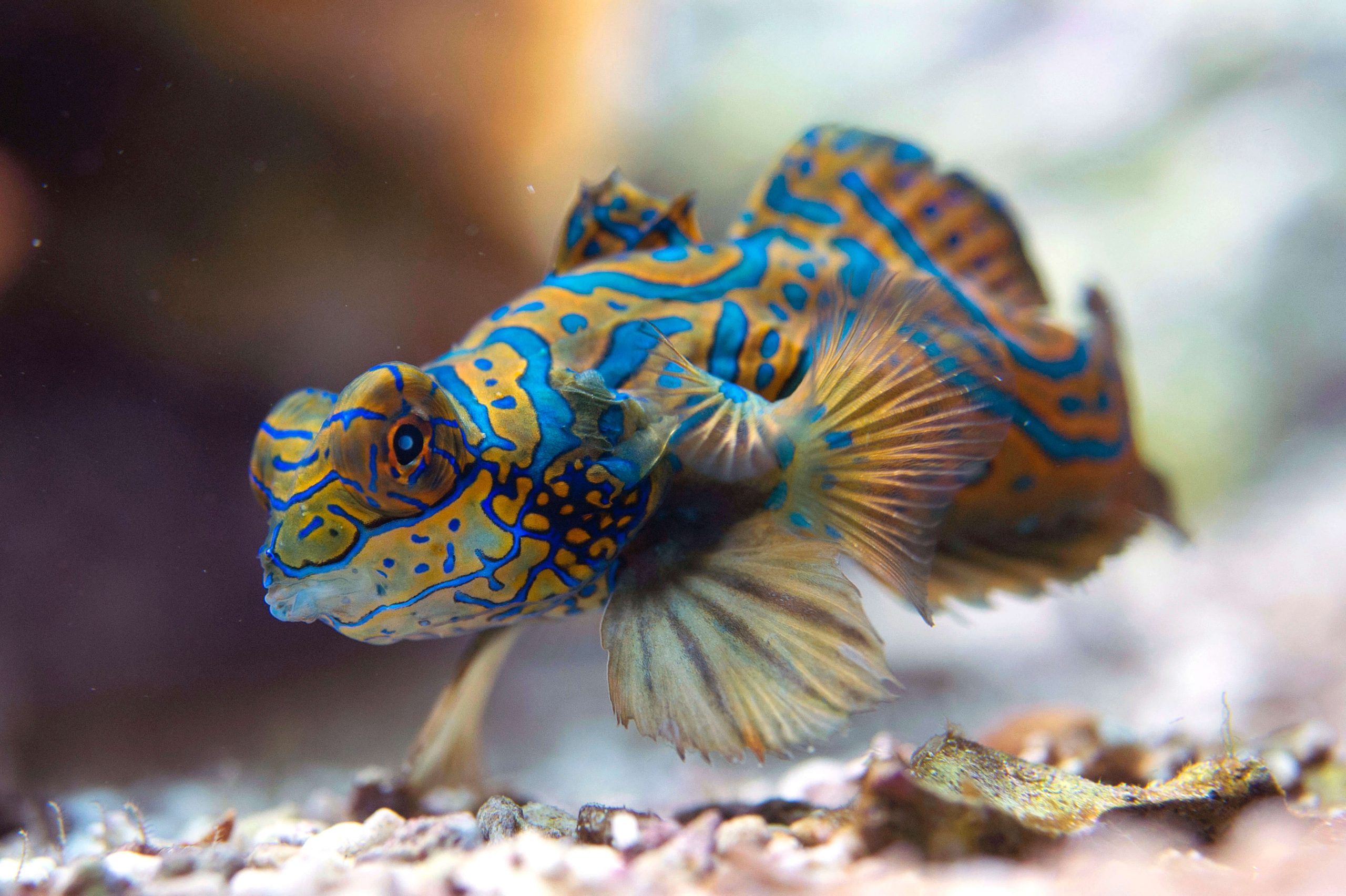
Blue and orange sit opposite each other on the color wheel: maximum separation, maximum visual balance. The same six-semitone distance in music is the tritone—historically treated as unstable, uncanny, even forbidden.
What the ear calls tension, the eye calls complementary.
05 · A real-world investigation
For ten chord-like birds, this pass looked for a published dominant or peak vocal frequency, converted that frequency to the nearest equal-tempered pitch class, and compared it with the plumage chord. Missing data and broadband calls are left unresolved rather than forced into a key.
No bird in this set produced a clean, species-specific match between a published dominant song frequency and its plumage chord. The closest cases rely on a weak estimate or another species as a proxy. Research also indicates that song and plumage elaboration can evolve independently, and some birds parse spectral shape and relative intervals more than absolute key.
Method: MIDI = 69 + 12 × log₂(f/440), then rounded to the nearest pitch class. A single peak is not a complete “key,” and bird calls often glide, contain noise, or span many frequencies. Great-tit research does show that relative interval precision can matter socially; that is different from a plumage color predicting an absolute tonic.
The chorus grows
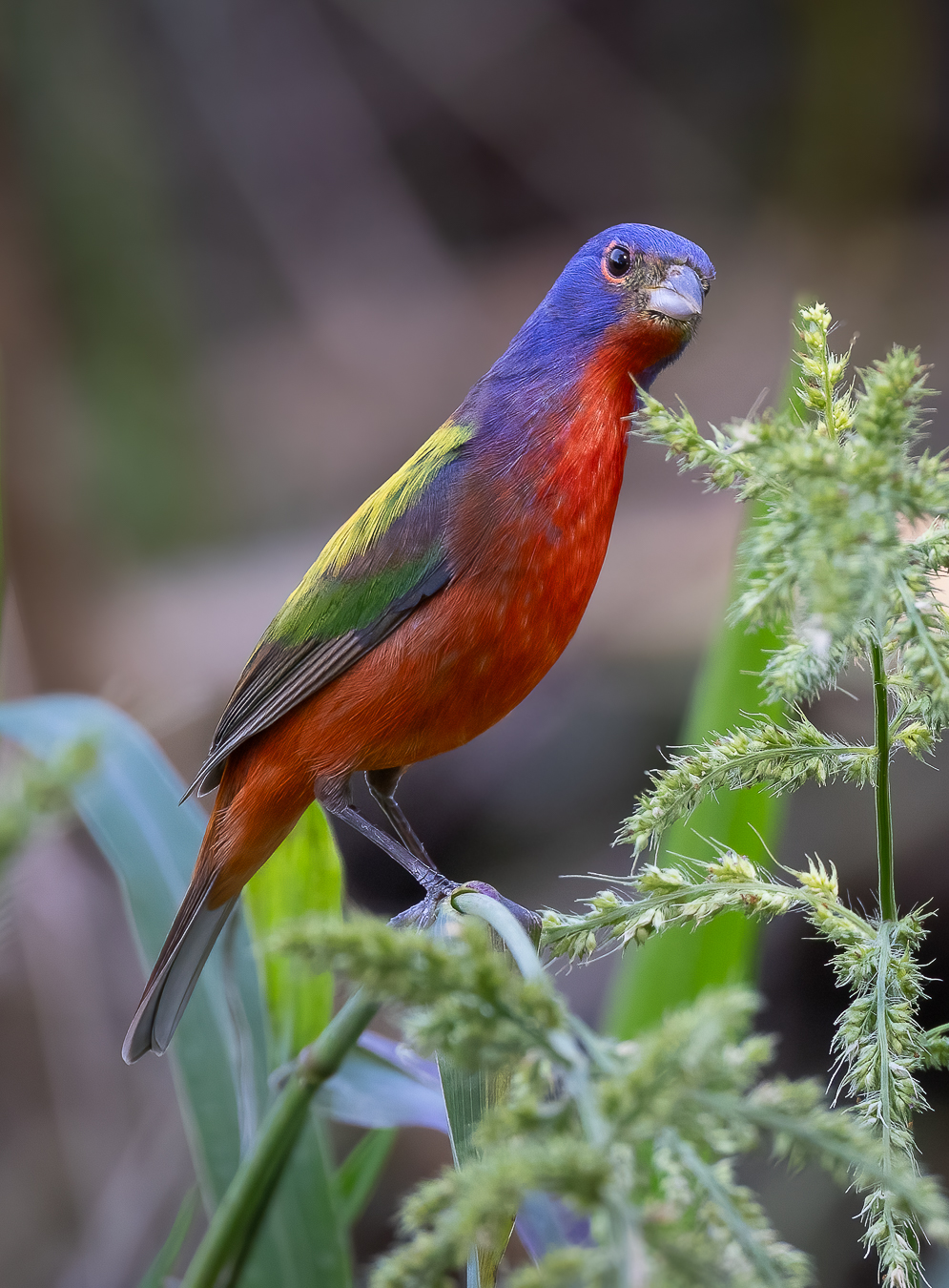
These are visual correspondences, not claims that an organism “hears” a chord. Every retained example photograph visibly contains the complete assigned palette; saturation and lightness may vary.
A field guide to harmony
This tighter field guide keeps only wildlife, art and architecture photographs that visibly contain every assigned chord tone. Pure black, white and gray do not count as tones, but black may shade a real hue—dark leaf green is still green.
Every retained card shows its complete assigned palette within roughly ±20° of the mapped hues. Each card shows both tuning palettes and identifies a lean only when the published color description supports one.
Some organisms combine colors for warning, signaling or sensory systems that sit well outside familiar harmony theory.
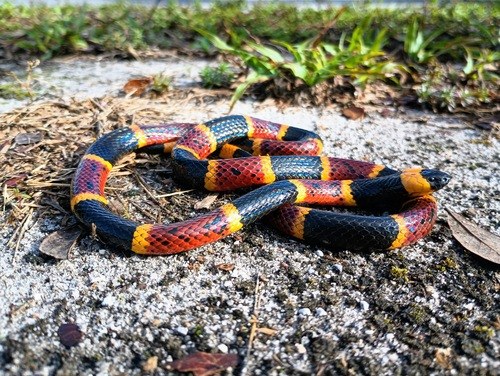
Wide red rings touch narrow yellow rings, with black in the sequence but excluded from the palette count. Here adjacency order—not only hue—carries the warning signal.
Leans A432. Its described red bands sit closer to A432’s red anchor than A440’s red-orange.
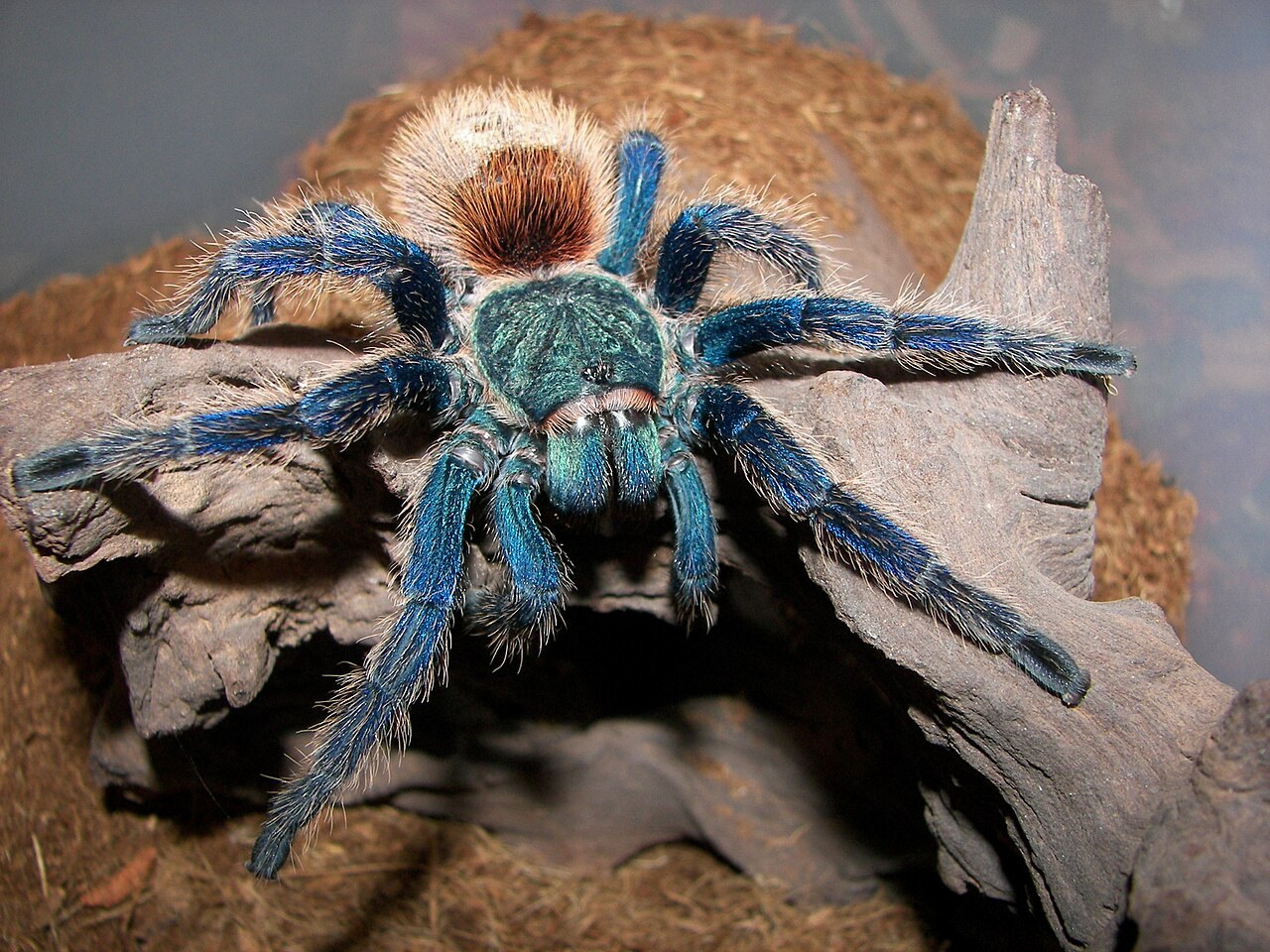
Metallic blue legs and a blue-green carapace meet an orange abdomen with almost no blending intermediary. The orange root is borderline for D minor, but the abrupt pairing is the point.
Leans A440. Its orange abdomen is nearer A440’s red-orange A; the blues remain approximate.